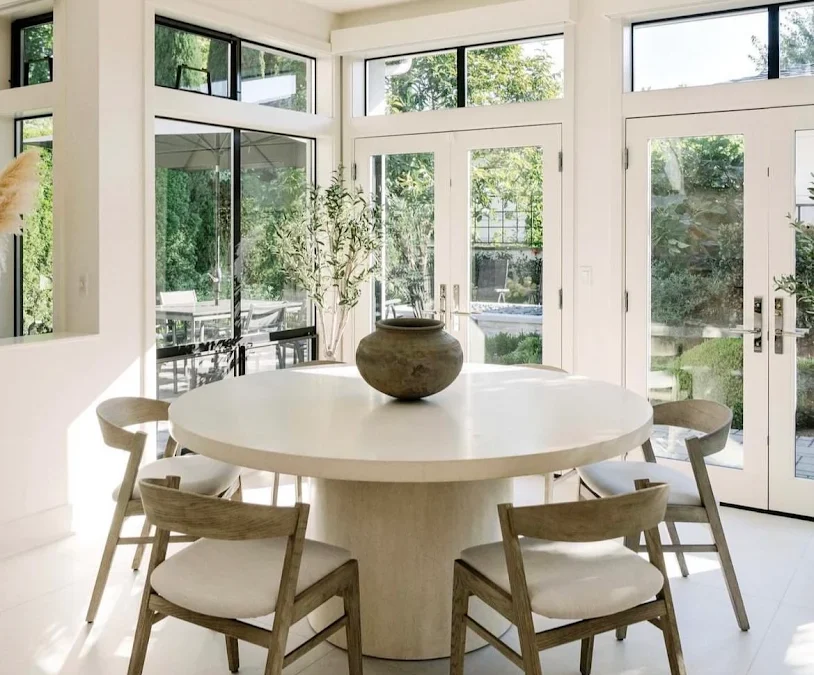
A designer’s guide to size, shape, style, and everyday function
Choosing a dining table seems simple… until you actually start shopping.
Suddenly you’re asking:
- Is this table too big?
- Will chairs fit comfortably?
- Does this style work with my home?
- Why does my dining space feel “off” even though I love the table?
As an interior designer, I see this all the time. A dining table is one of the most-used pieces in a home, and when it’s chosen incorrectly, it affects traffic flow, comfort, and how inviting the entire space feels.
This guide will walk you through how to choose the right dining table for your space.
1. Start With the Room, Not the Table
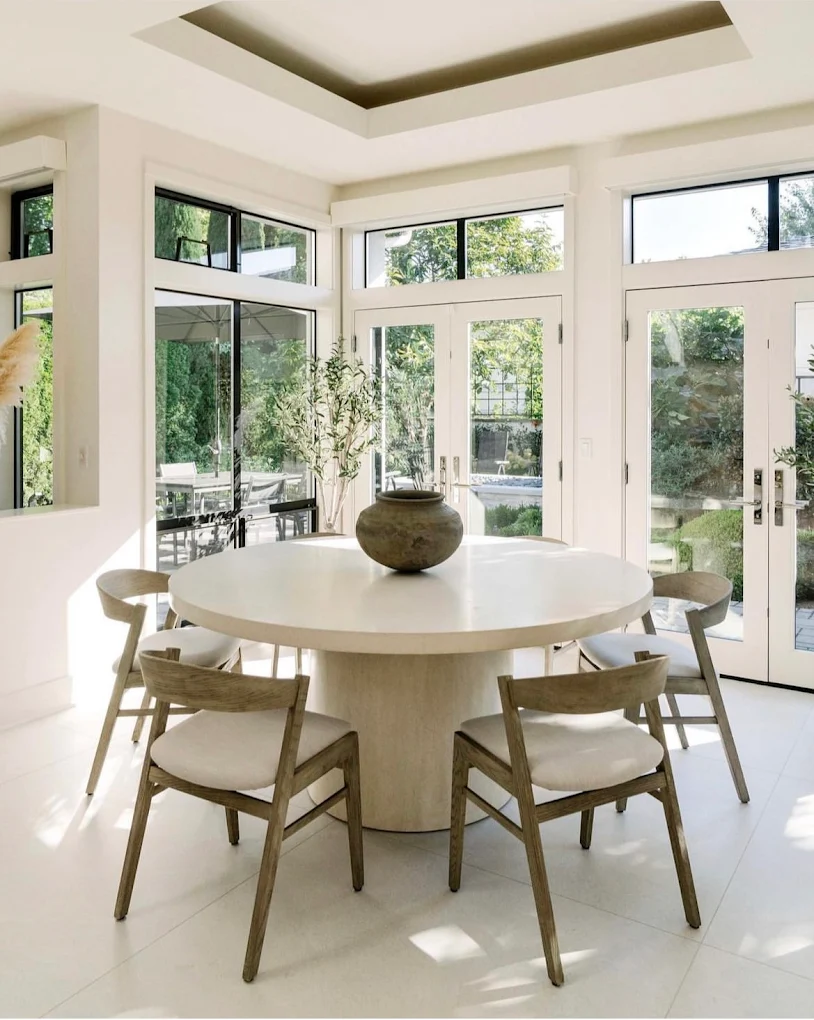
One of the biggest mistakes people make is choosing a dining table based on looks alone. Before falling in love with a style, you need to understand your space.
Measure your dining area
You’ll want at least 36 inches of clearance on all sides of the table so people can comfortably pull out chairs and walk around.
If your dining area is tight or open to another room, this clearance becomes even more important.
Designer tip:
If you’re unsure, mark out the table size on the floor using painter’s tape. It instantly shows whether a table will feel spacious or cramped.
2. Choose the Right Dining Table Size
Dining tables are often oversized for the space they’re placed in, which makes rooms feel heavy and crowded.
Here’s a general guideline:
- Small dining spaces (or breakfast nooks):
36–48 inches wide - Medium dining rooms:
60–72 inches long - Large dining rooms or open layouts:
84–96+ inches long
You should allow 24 inches of table width per person for comfortable seating.
If you frequently host, consider an extendable dining table. It offers flexibility without permanently overwhelming your space.
3. Dining Table Shape Matters More Than You Think
The shape of your dining table affects how people move through the room and how intimate or formal the space feels.
Rectangular Dining Tables
Best for:
- Long rooms
- Open floor plans
- Larger families
This is the most common and versatile shape, especially for open-concept homes.
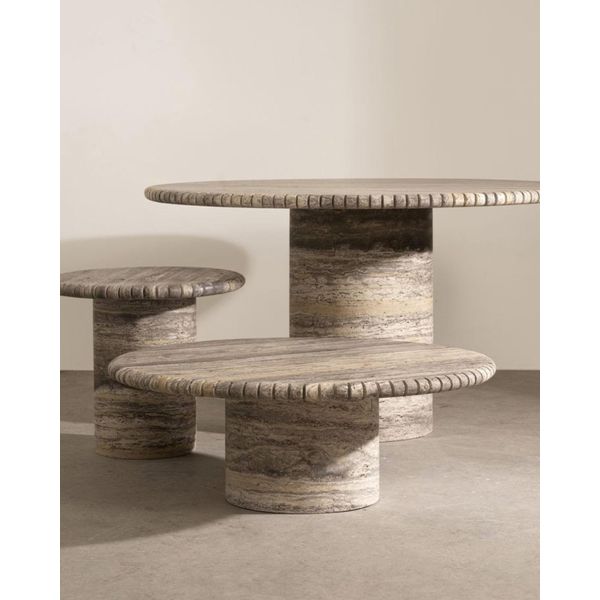
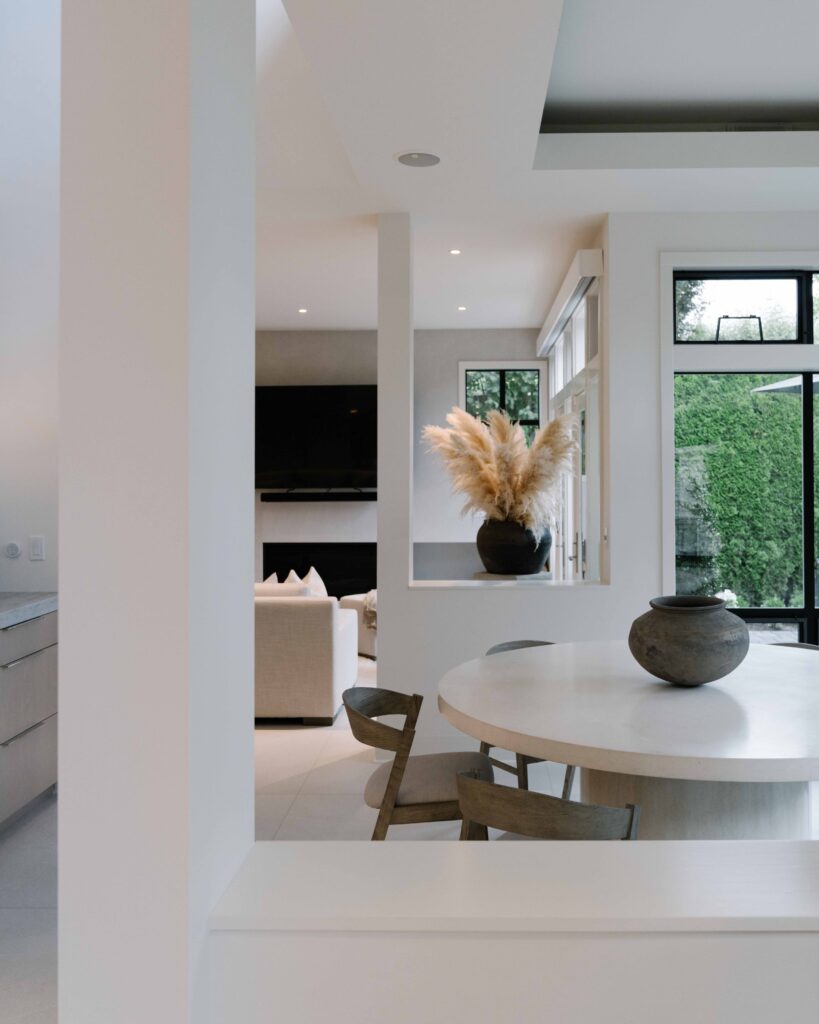
Round Dining Tables
Best for:
- Small spaces
- Square rooms
- Creating conversation-friendly seating
Round tables soften a space and improve flow where corners would feel tight.
Oval Dining Tables
Best for:
- Narrow rooms that need softer lines
- Transitional or modern spaces
They offer the seating of a rectangle with a more fluid visual feel.
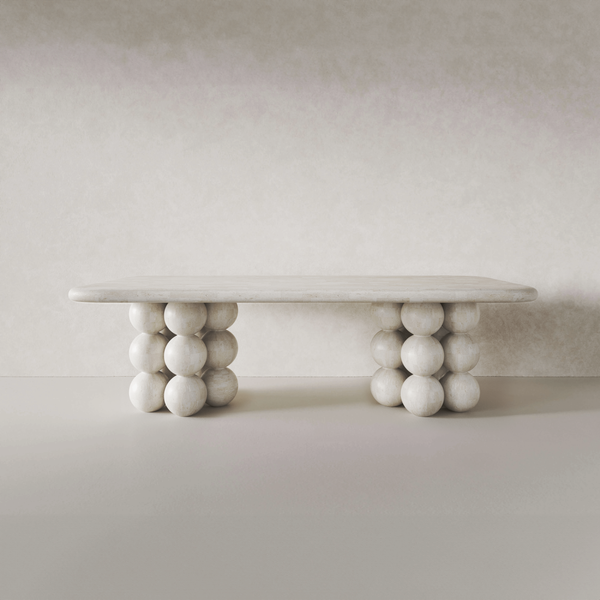
4. Consider the Base (This Is Often Overlooked)
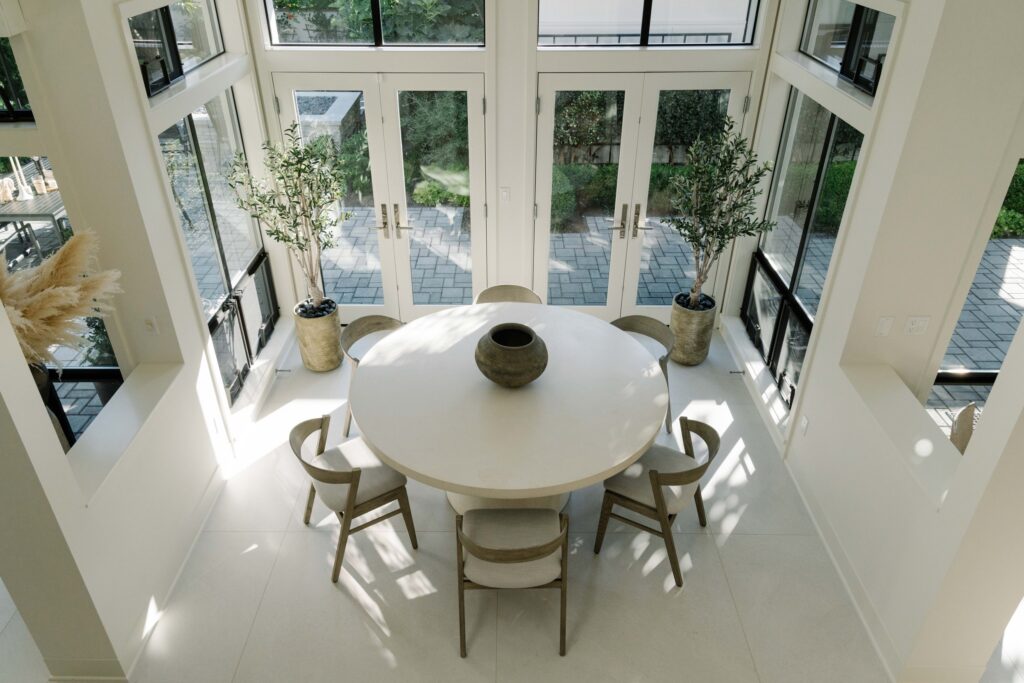
The table base affects legroom and seating flexibility.
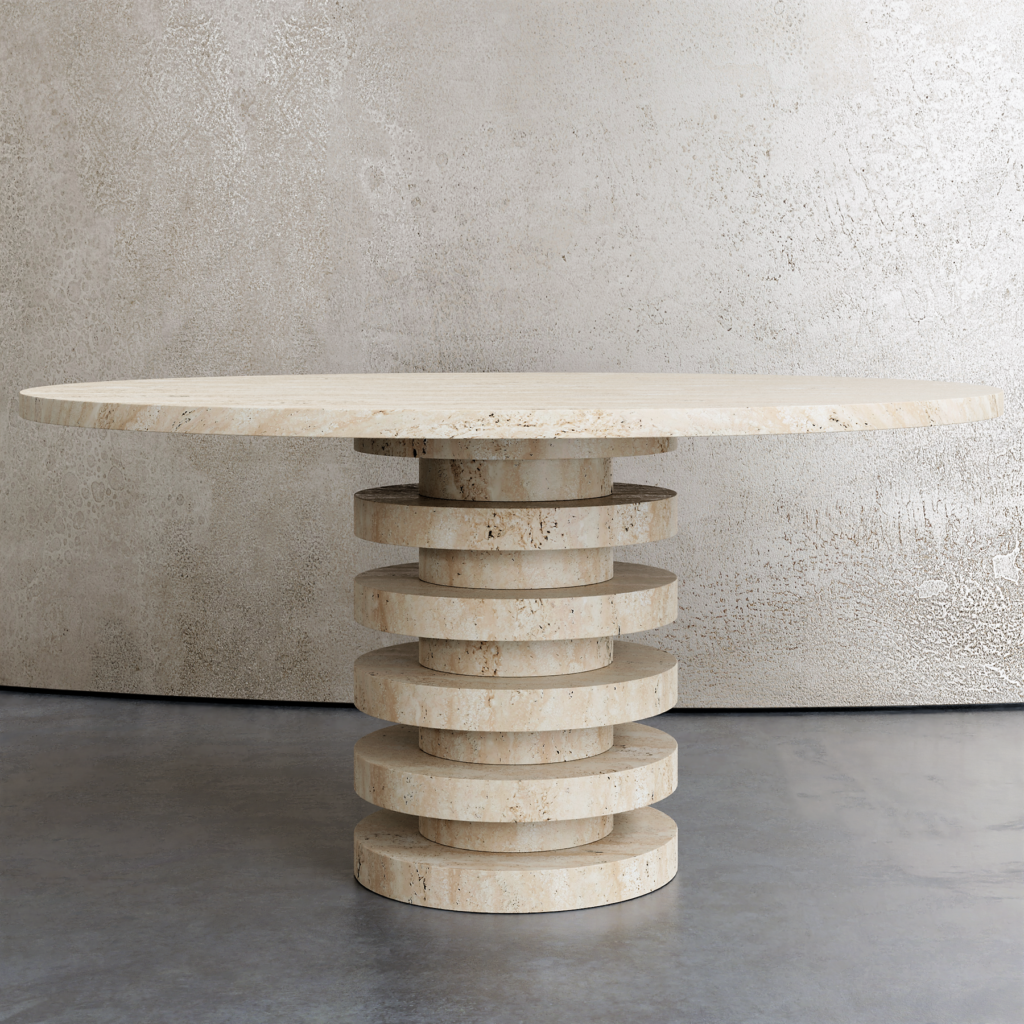
- Pedestal bases are ideal for smaller spaces and round tables
- Four-leg tables offer classic structure but can limit chair placement
- Trestle bases work beautifully in large rooms but need extra clearance
If comfort matters (and it should), the base is just as important as the top.
5. Match the Table to Your Lifestyle, Not Just Your Aesthetic
A dining table should reflect how you actually live.
Ask yourself:
- Do you host often?
- Is this table used daily or occasionally?
- Do you have kids or pets?
- Is this a formal dining room or a casual everyday space?
For high-use homes, durable finishes and forgiving materials matter more than trends.
Designer-approved materials for everyday homes:
- Solid wood with a matte or satin finish
- Veneer with a strong core
- Sealed stone or composite tops for modern spaces
6. How to Choose a Dining Table Style That Feels Cohesive
Your dining table doesn’t need to perfectly match your home — but it should belong.
A good rule of thumb:
- Traditional homes → softer edges, warm wood tones
- Modern homes → clean lines, minimal profiles
- Transitional homes → simple silhouettes with warmth
When in doubt, choose a timeless shape and let chairs, lighting, and styling bring in personality.
7. My Go-To Dining Table Recommendations
When clients ask me where to start, I always recommend tables that balance scale, durability, and timeless design.
I’ve curated a small collection of dining tables I consistently recommend because they:
- Work in real homes
- Photograph beautifully
- Age well over time
When to Hire an Interior Designer
If your dining space still feels “off” even after choosing the right table, it’s often not the table — it’s the layout, lighting, or surrounding pieces.
An interior designer helps you:
- Choose the correct scale for your home
- Create balance with chairs, rugs, and lighting
- Avoid costly mistakes
- Build a space that functions beautifully every day
If you’re ready to create a dining space that feels intentional and effortless, I’d love to help.
Not sure what size or style will actually work in your home?
I offer personalized design guidance to help you make confident, lasting decisions.
Contact me here! Or follow me on Instagram